
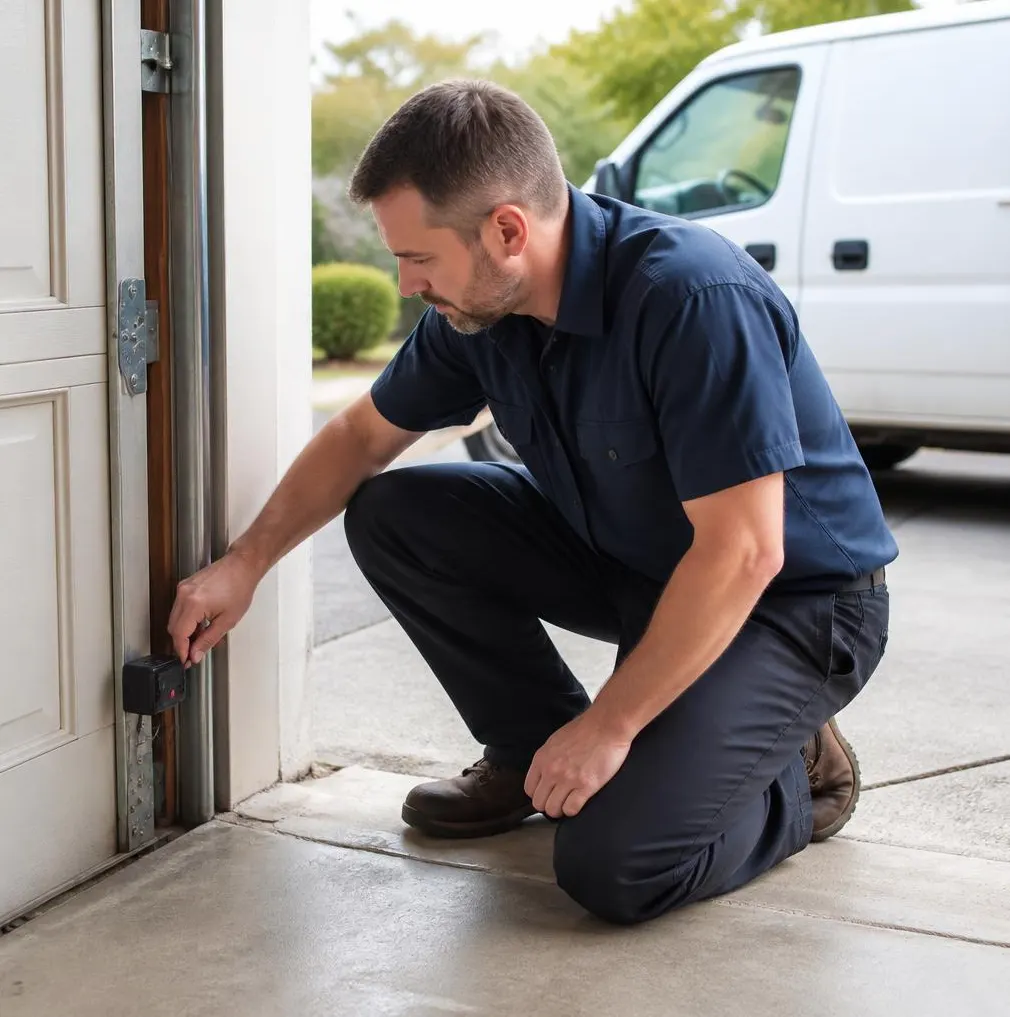
What a Technician Sees on This Kind of Call
When one of our techs gets called out for "something's wrong with the garage door" in this area, the pattern is usually familiar before they even open the truck door. A steel door with the bottom 8 to 12 inches bubbling under the paint, orange rust creeping along the seams. A wood door with a bottom rail that's swollen just enough that it drags on the track or won't sit flush when it closes. Hinges and bottom brackets caked in rust-colored grit. Sometimes a chalky white residue building up on aluminum trim. None of this is random — it's what humid summers, salted winter roads, and big temperature swings do to a door over a few years.
This is usually also the point where one spouse says "it's just surface rust, it's fine," and the other says "the door is falling apart, we need a new one." Honestly, the truth usually lands somewhere in between, and which one of you is right depends on exactly where the damage is.
Why This Happens Here Specifically
A few things about the local climate work against garage doors in a way that's worth understanding:
- Humid summers push moisture into tiny gaps, dings, and seams in steel panels, where it sits trapped against the foam insulation backing and rusts the metal from the inside out — long before you see it from the outside.
- Cold winters with ice and salt mean road salt gets sprayed onto cars, drips onto the garage floor, and splashes onto the bottom of the door and track. Salt is far more corrosive than plain rainwater and eats through galvanized coatings much faster.
- Spring storm season drives wind-blown rain directly into door seals and weatherstripping, so water pools at the bottom track and soaks into any exposed wood repeatedly.
- Big seasonal swings between hot and cold make paint and seals expand and contract, cracking the surface open just enough for moisture to get underneath.
Surface Rust vs. Structural Rust — How to Tell
Not all rust means the same thing, and this is usually where the household disagreement gets settled.
- Surface rust: dull orange discoloration, some flaking, but the panel is still solid underneath, the door still seals and moves freely. This can be sanded, primed, and repainted — it's not urgent.
- Structural rust: bubbling or blistering paint, metal that feels soft or gives when pressed, flaking that exposes pitted metal underneath. If you see rust on springs, cables, or hinges, treat it as a safety issue — a corroded spring under tension can snap, and a rusted hinge can shear without warning.
- Rusted track: causes binding and makes the opener work harder than it should, which shortens its life too.
Wood Doors Swell Differently — and It's Not the Same Fix
Wood absorbs humidity directly, and the bottom rail nearest the ground takes the worst of it. A swollen panel won't latch properly, scrapes the track, and once it dries out unevenly it can warp permanently instead of returning to shape. Repeated wet-dry cycles can also delaminate plywood panels, which shows up as bubbling or peeling veneer that paint won't fix.
What actually helps: make sure gutters and downspouts direct water away from the door opening, confirm the bottom seal is intact and the track isn't holding standing water, and reseal or repaint exposed wood before winter sets in — not after. Rotted sections need to be replaced, not painted over.
What Actually Fixes It vs. What's a Band-Aid
- Painting over rust without removing it — band-aid. The rust keeps spreading underneath the new paint.
- Replacing worn bottom weatherstripping and the bottom seal — real fix, stops water from sitting against the door in the first place.
- Lubricating hinges, rollers, and springs — cheap, takes a few minutes, and genuinely slows rust by displacing moisture. Worth doing before the salt-and-ice months start.
- Replacing a single rusted panel on a sectional steel door — often possible and cheaper than a full replacement; panel costs commonly run in the low hundreds of dollars depending on size and style, as a general national range.
- Full door replacement — the right call when rust has eaten through multiple panels, wood has delaminated in several spots, or structural hardware like hinges and tracks is failing.
When to Call South Charleston Garage Door
If you're seeing bubbling paint, a door that won't seal flush, or rust anywhere near the springs or hinges, it's worth having it looked at before winter's ice and salt make things worse. South Charleston Garage Door can run a Preventive Maintenance visit to catch early rust and swelling before it becomes structural, and handle Spring Replacement on the spot if a load-bearing spring is corroded. For doors with isolated panel damage, straightforward Garage Door Repair is usually enough instead of a full replacement.
If your garage door in South Charleston, OH or the surrounding area is showing rust, swelling, or sticking before closing, call South Charleston Garage Door for an inspection now — before the next freeze-thaw cycle makes the decision for you.